
Joe Barnes and photographing customs
This is a guest post from photographer, Joe Barnes. Take it away, Joe!
I’m Joe, a photographer living in south Manchester, currently documenting British folk customs. I was born in Kendal, Cumbria in 1985, and grew up in Lancashire and North Yorkshire. At school I had a passion for art, before studying History of Art at Goldsmiths in London in 2003. By 2010 I’d developed a passion for photography and began photographing folk customs soon after.
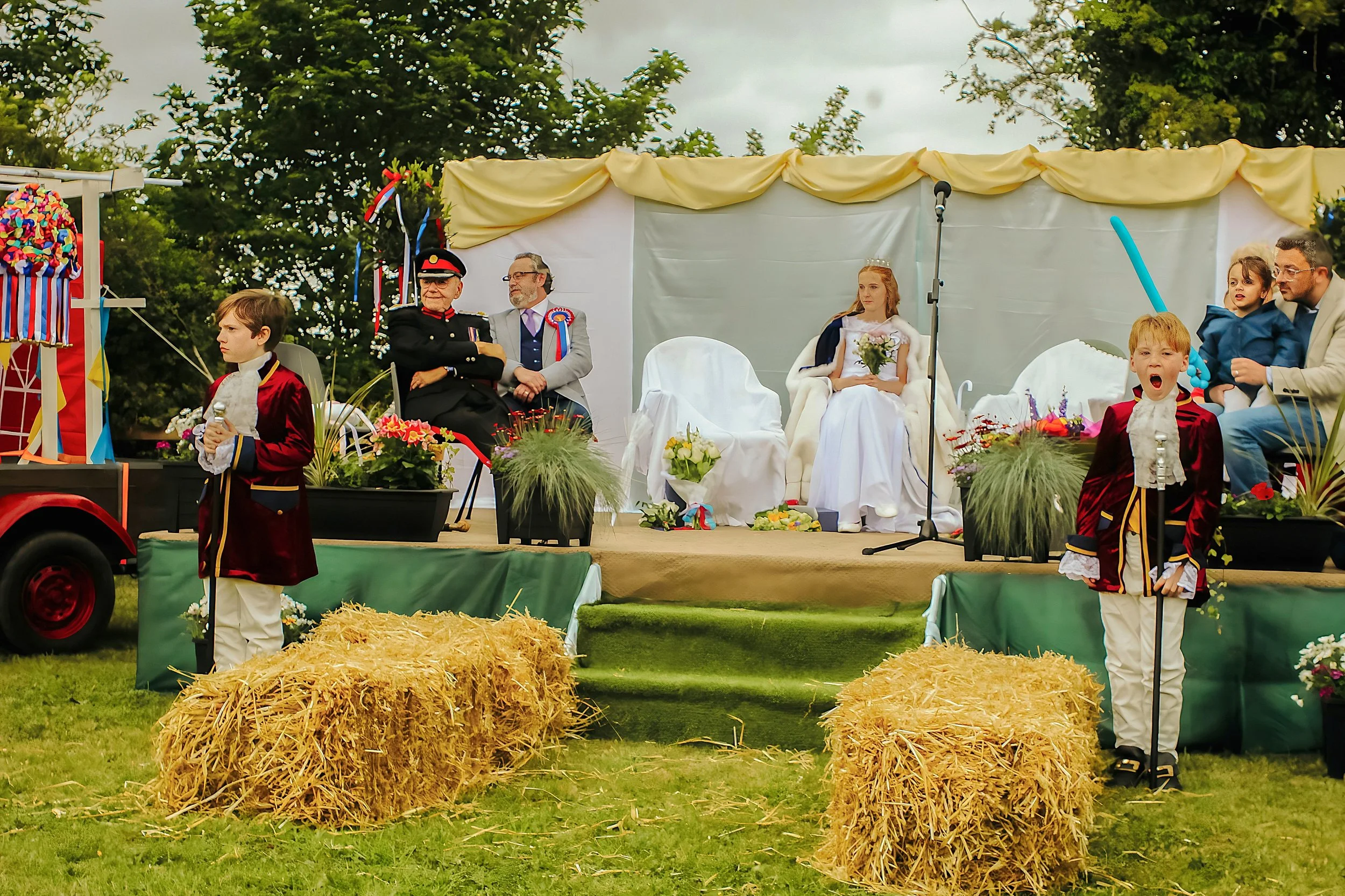
Barwick-in-Elmet Maypole, West Yorkshire 2025.
The factual origins of many folk customs have been lost to time, but they are commonly believed to be symbolic of our relationship to the land or the changing seasons, while also depicting local mythology, beliefs or lore that have been passed down through generations.
My passion for folklore emerged when I discovered the photography of Homer Sykes and Tony Ray-Jones around 2010 through the Hayward Gallery publication No Such Thing as Society (2007), and Sykes’ incredible record of British folk customs, Once a Year (1977) – an invaluable reference point and artefact for anyone interested in the subject. Besides these inspirations, my photography is influenced by the work of Chris Killip and Saul Leiter, while I also love the work of Peter Hujar.
I encountered the iconic Burryman for the first time through one of Homer Sykes’ photographs, and its strangeness stopped me in my tracks. This extraordinary image encapsulated the Burryman’s uncanny (and somewhat unsettling) characteristics and is probably my favourite photograph. You can view the image of the Burryman here: The Burryman (1971) by Homer Sykes.
Exposure to this older photography led me to begin my own folklore journey, prompting curiosity about how these customs had been preserved in the 21st century. Between 2011-14, I attended numerous folk traditions (including the Burryman).

Joe’s own image of the iconic Burryman.
Around then I met the folklorist Doc Rowe, who offered advice and encouraged me to continue pursuing the subject. My passion for all things photography led to me excitedly meet Sykes, Chris Killip and Martin Parr at events in London. As well as folk rituals, I was photographing protests and street scenes in London, while developing the negatives at home.
I found British folk customs to be mesmeric and visually exciting, though I hadn’t anticipated the degree to which learning about and experiencing them would enrich my life. Documenting folk customs means I visit parts of the UK I otherwise probably wouldn’t. There’s a thrill to arriving at a previously unexplored location and absorbing the sights, sounds and unique characteristics of that place. Folk customs are an excuse for a community to celebrate itself, and there always seems to be an electricity in the air as anticipation builds towards the day’s main event. I’ve received many warm welcomes and generous gestures on these trips, and I feel a responsibility to represent participants and communities positively and respectfully through my photographs. The revival of interest in folk customs in recent years has shown there is a growing appetite to connect with our shared past, for meaningful community experiences and perhaps even a healthier, more inclusive form of national pride that can be generated through participation in these customs. Their annual occurrence provides a reassuring embodiment of our shared local (and national) histories.

The Queen’s Jubilee parade, 2012.
The richness and diversity of British calendar customs make them a potent subject for a photographer. They involve unusual imagery, unique stories and changing scenery (via processions). There’s also the vibrancy of the hand-crafted displays – the costumes, garlands and parade floats.
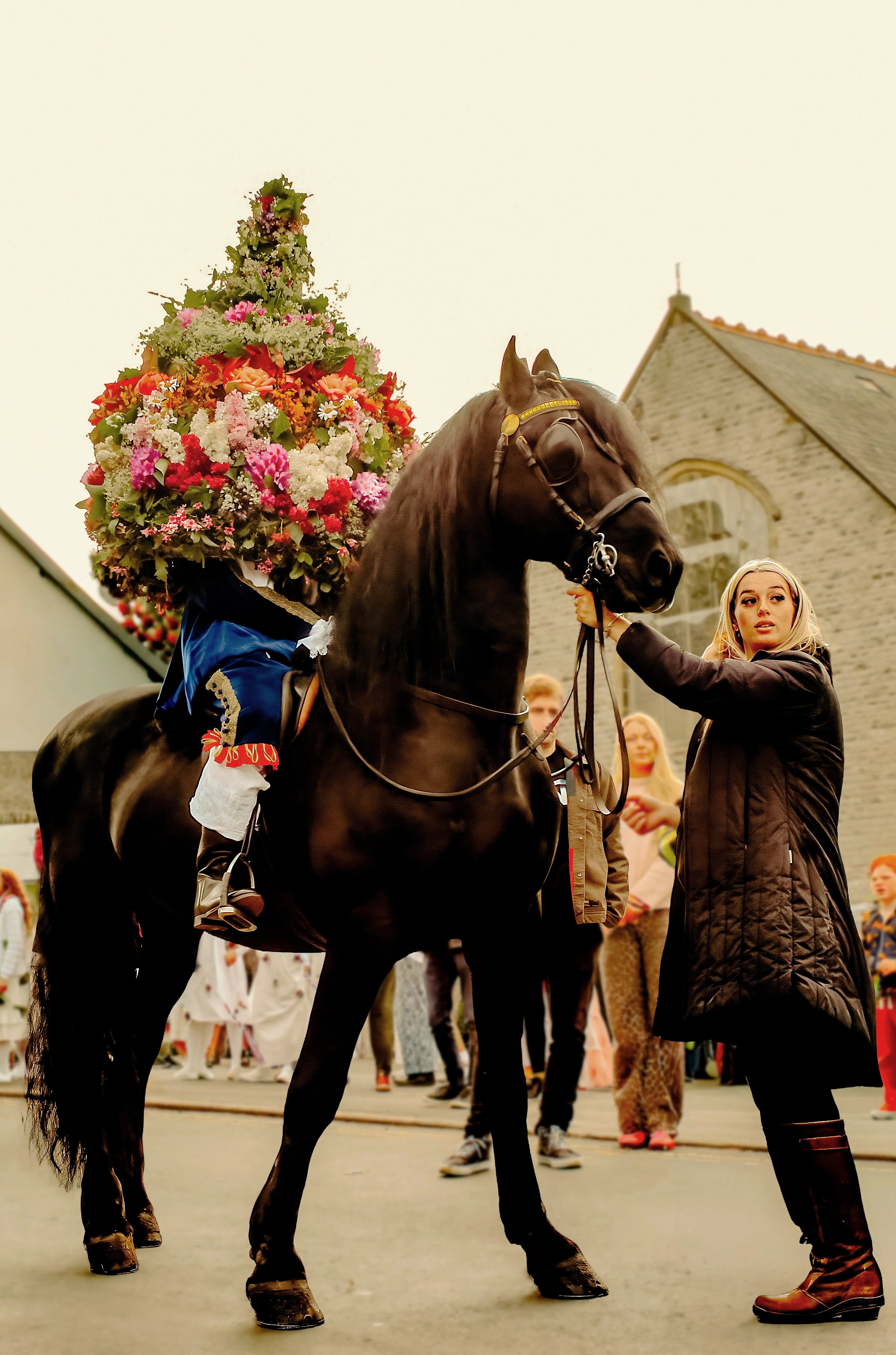
Castleton Garland Day, 2025.
It’s important to remember that folk customs are not irrelevant, outdated practices and they continue to evolve, modernise and adapt. There are, however, more traditional aspects of folk customs that can contrast intriguingly with the modern (there’s something pleasingly disjointed about the juxtaposition of the archaic and the contemporary), and this contrast can be part of their appeal. The blending of old and new can enhance the appeal of the folk custom as spectacle and promote wider interest in folk culture.
Almost as important as what we can see and do know, is what we can’t see, and don’t. There’s an enigma to folk customs – the age of many obscuring the definitive facts of their origin - which of course contributes to the lore that surrounds them. For many folk customs, the enigma is integral to their meaning – and part of their allure. Their arcane, charismatic qualities are encapsulated by their hidden properties – what, or who, is under the garland, the hood, the mask? This secrecy translates perfectly to photography, prompting ambiguity and creating visual intrigue. Additionally, folk customs are simply joyous and exciting events to cover, with an abundance of distinctive and eye-catching features.

Our Lady of Mount Carmel, Clerkenwell, London, 2014.
After a hiatus in the late 2010s and early 2020s, I had the opportunity to relaunch the folk custom project. I now feel more motivated than ever to capture the vibrancy and eccentricities of folk customs, and have multiple events lined up for the year ahead. Eventually, I am hoping to exhibit the results. In the future, I hope to cover some European customs and develop my skills in portraiture and landscape.

Mari Lwyd, Chepstow, 2025.
You can view more of Joe’s work on his website here and connect with him on Instagram here.