
Herbal Hegemone and a study of wortcunners
Clare Lesley Hughes is a wortcunner based in Yorkshire — and if you’ve not come across that term before, fear not. Clare will explain all…
Hello everyone, and thank you so much for the opportunity to write this blog for you. My name is Clare Lesley Hughes, and I am a scholar of Environmental Philosophy and Sociology of Religion currently based near York. My first PhD was in biology (ecological effects of climate change), and now I am undertaking a second PhD in Humanities, Religion and Philosophy at York St John University, exploring plant-human entanglements, both physical and spiritual, in contemporary British wortcunners (Old English: Knower/Knowledge of Plants). This has involved interviewing women and non-binary individuals about their connections with plants, with a particular focus on how they see them as vitalistic, vibrant, more-than-human entities. I then employ various theories and lenses through which to explore these stories, including philosophical lenses such as ecofeminism, new materialism, animism, and enchantment, and sociological lenses such as epistemic injustice, sticky objects, and cultural haunting.
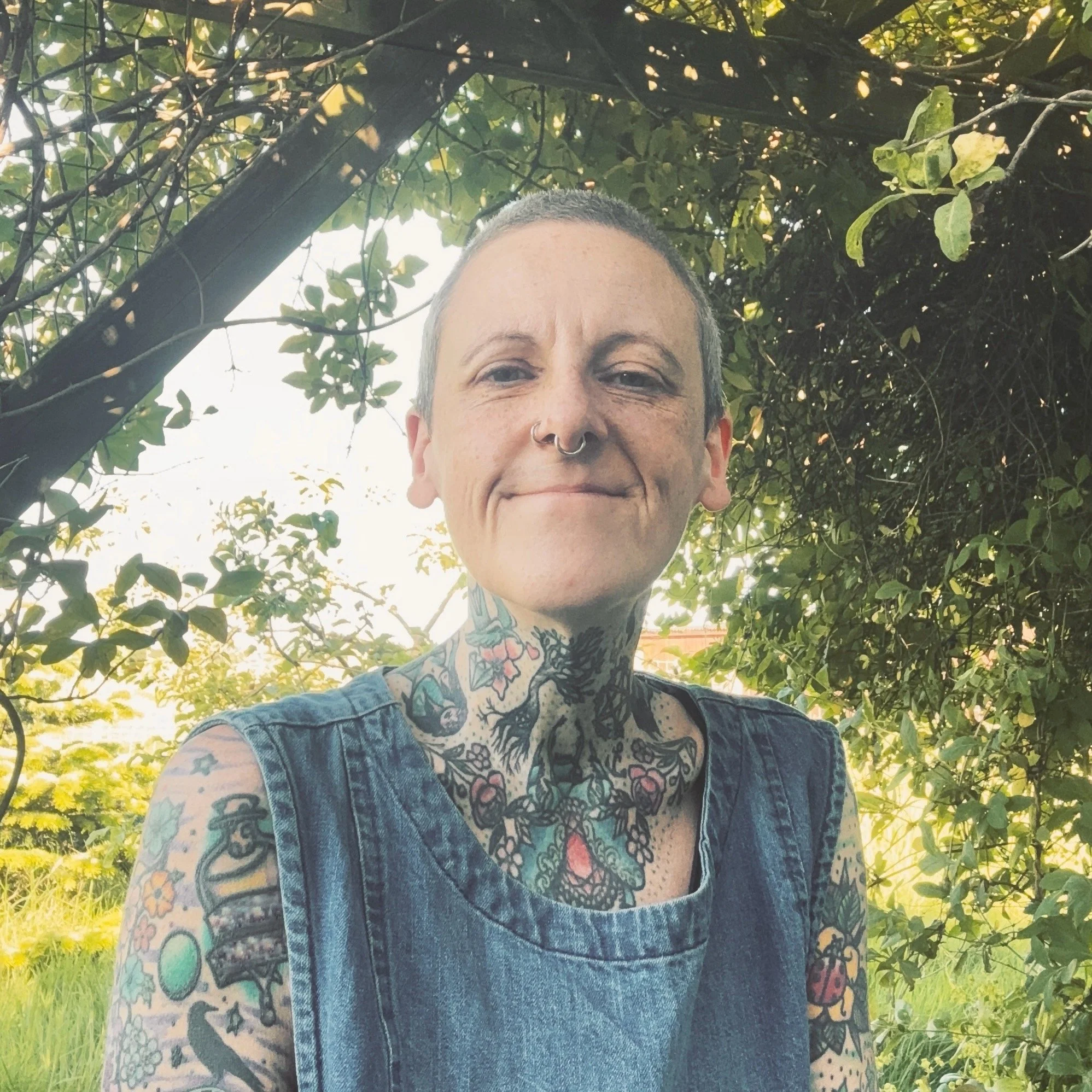
Clare Lesley Hughes, wortcunner and academic.
Alongside my academic work, I run my own business, Herbal Hegemone, which offers plant-based products such as herbal teas and essential oils and serves as an educational platform, hosting workshops, seminars, and a blog that explores themes including enchantment, environmental ethics, and philosophical animism. A typical workshop of mine will involve a guided walk-and-talk exploring the folklore and magic of various native and naturalised plants, including medieval medicinal and ‘magical’ uses, as well as more contemporary connections. These talks usually take place in urban areas and have included explorations of oak, yew, hawthorn, lavender, daffodil, rosemary, cowslip, plus many more. I also like to incorporate creative and art-based techniques into my workshops to facilitate the expression of connections with the more-than-human world.
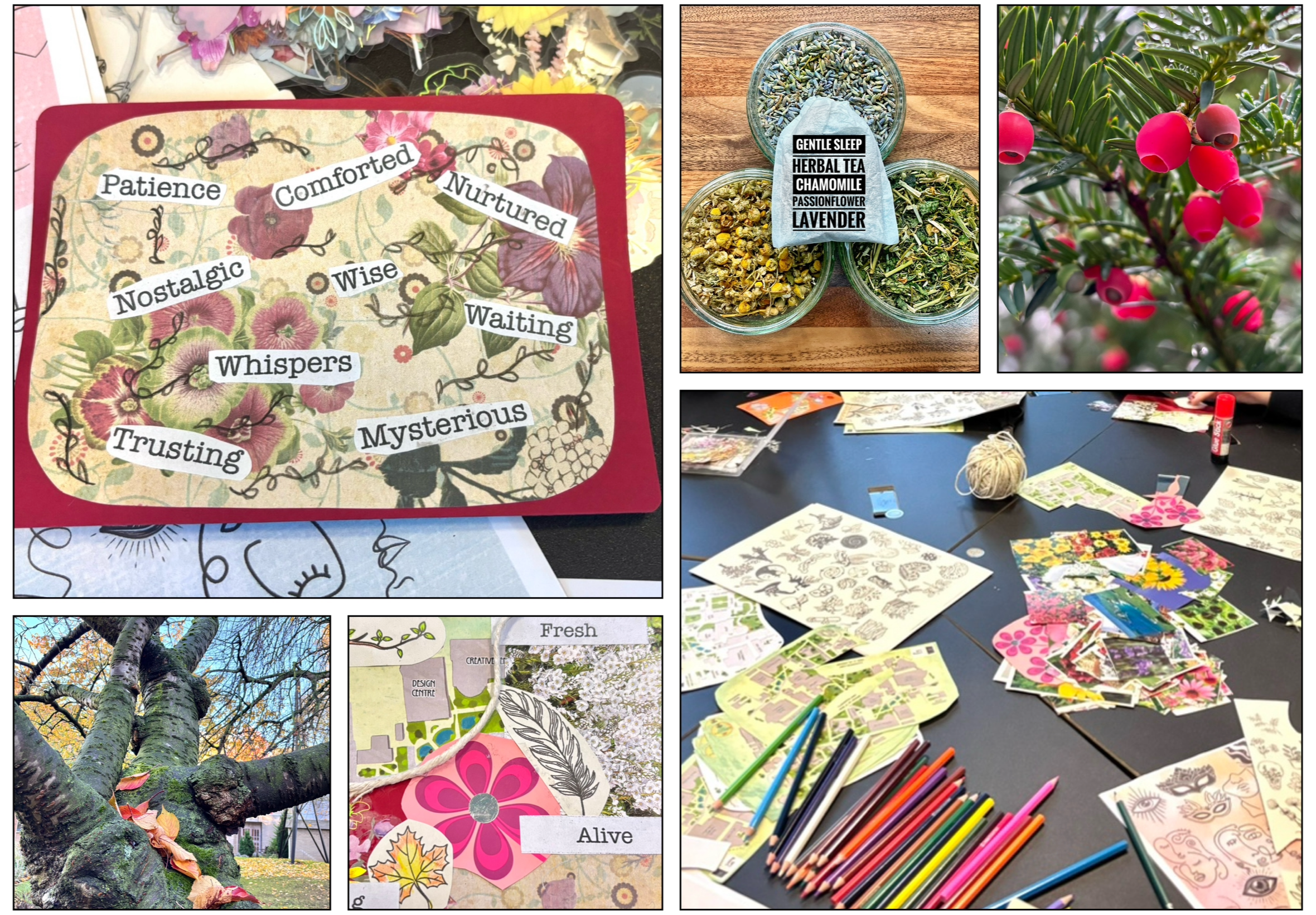
‘My research also explores people who feel a deep connection to plants, and how society treats them - whether they are believed, doubted or dismissed’
Returning to my research, some of the most memorable stories from British wortcunners have been that of a childhood friend in the form of a willow tree, sadly cut down when the family moved away; a hawthorn bush that flowered upon the death of one’s mother; a vengeful elder tree that took offence when permission to harvest her berries wasn’t forthcoming; a haunted and isolated ancient oak woodland whose fury at deforestation was tangibly felt; an urban Victorian terrace house festooned with vibrant agentic plants; several grandmothers who acted as conduits to herbal knowledge; a cup of chamomile tea personified as a female form with corn and poppies; a lime tree who provided much needed feminine energies, and a sage plant who insisted on being planted in a spot that would eventually kill it.
As you can see, the thread that binds all facets of my life together is plant folklore. I am particularly interested in how contemporary stories can become folklore if remembered and shared with others, and I hope that, in sharing the stories of the wortcunners, some of their wonderful stories can be passed down into folklore too. Finally, I love collaborating with like-minded people, so please feel free to get in touch with me about anything plant-related.
To find out more about Clare, wortcunners, her research and her work, please visit her website Herbal Hegemone.