
John Widdowson and a lifetime of folklore
On 25 March 2005, David Clarke interviewed his former PhD supervisor, Professor John Widdowson, for the Sheffield Telegraph. We have reproduced that article here below, and today on the Folklore Matters podcast, you can catch David and John in conversation with Andrew Robinson. Just search ‘Folklore Matters’ wherever you source your podcasts, or head to the ‘Podcast’ page of this website for more information.
He would never admit it, but John Widdowson has become a legend in his own lifetime. Back in the early 60s – in the face of general disinterest from the academic world– he fought to introduce the teaching of folklore in further education. Fortunately, the sniffy attitude of some colleagues towards “the F word” – one of whom famously dismissed folklorists as “tree huggers” – wasn’t shared by generations of students and many ordinary people. As a result, the National Centre for English Cultural Tradition he founded at Sheffield University is still going strong. But during its 40 year history it has endured a precarious existence, continually at the mercy of changing fads in education and Government funding.
Despite the odds stacked against it - a shoestring budget, a largely voluntary staff and a variety of temporary buildings – the centre and its staff created a unique archive of English language and tradition, much of it collected from Sheffield and its region. Last year John Widdowson, now an international authority on folklore, retired and this year he celebrates his 70th birthday. Notoriously crotchety in his relations with the powers that be, he is now negotiating with the university over the future of the centre’s library and archive.
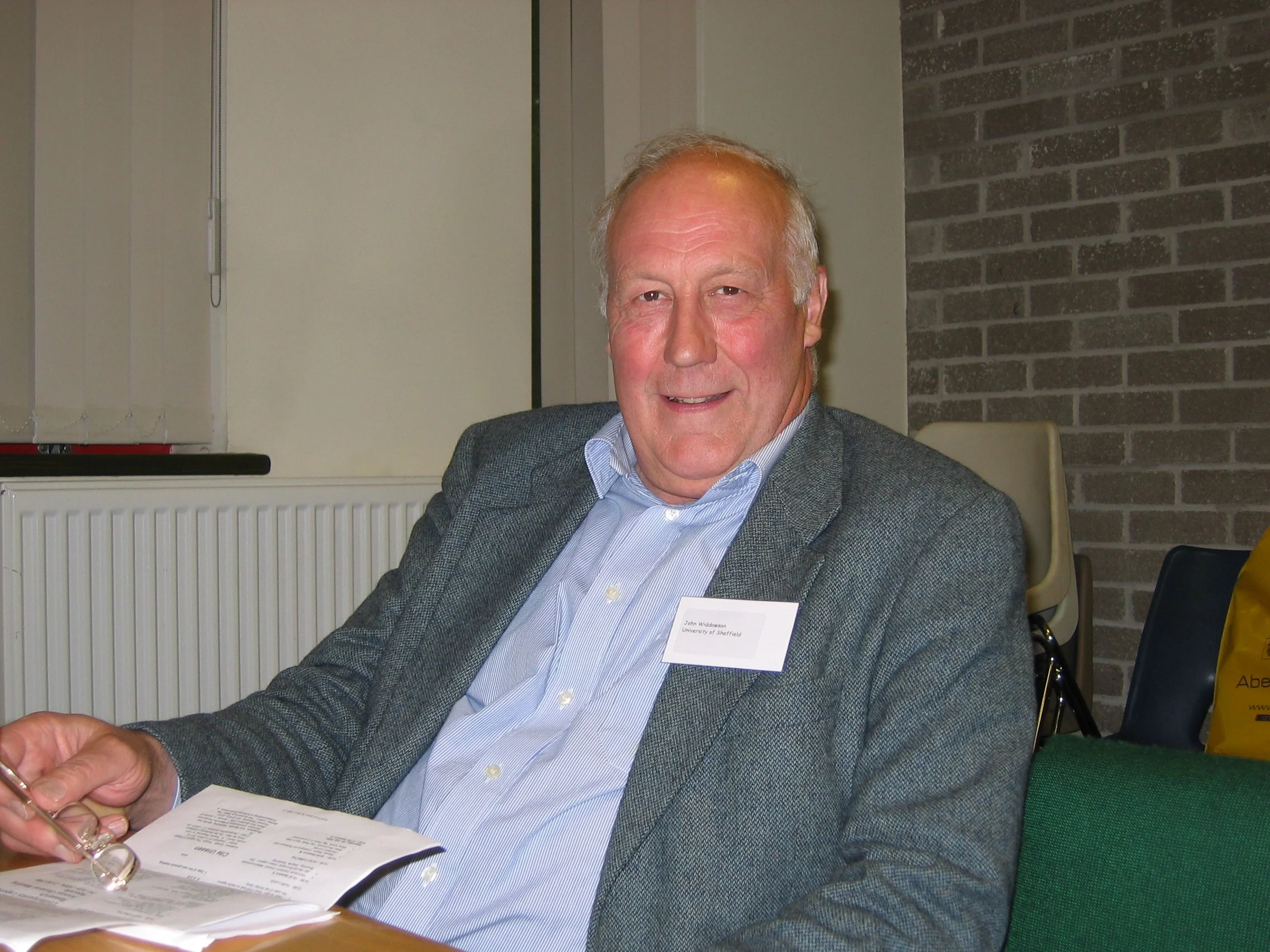
John Widdowson, 2004.
John Widdowson was born in Norton in 1935 and spent his childhood on his father’s smallholding at Barlow. After a grammar school education and National Service where his favourite title in the Ordnance Corps was Messing Officer (“I’ve been messing ever since”), he was one of the fortunate few from the post-war generation to win a scholarship to university. “I was the first in my family to go, because prior to that the word university wasn’t in anyone’s vocabulary locally; most people going on to higher education went ‘to college’” he said.
And while his fascination with the English language and its regional variations began in England, it was at remote Memorial University in St John’s in Newfoundland that he was introduced to the arcane world of folklore. In 1964 he went to Canada to study under an anthropologist, Professor Herbert Halpert. “It was entirely down to him that I got interested in the subject,” he recalls. “When I went there I thought I had no folklore and I used all the same clichés used by people today. But Halpert gave me a pile of cards and a copy of Iona and Peter Opie’s book, The Lore and Language of Schoolchildren, and asked me to jot down items and variations on those I recognised.
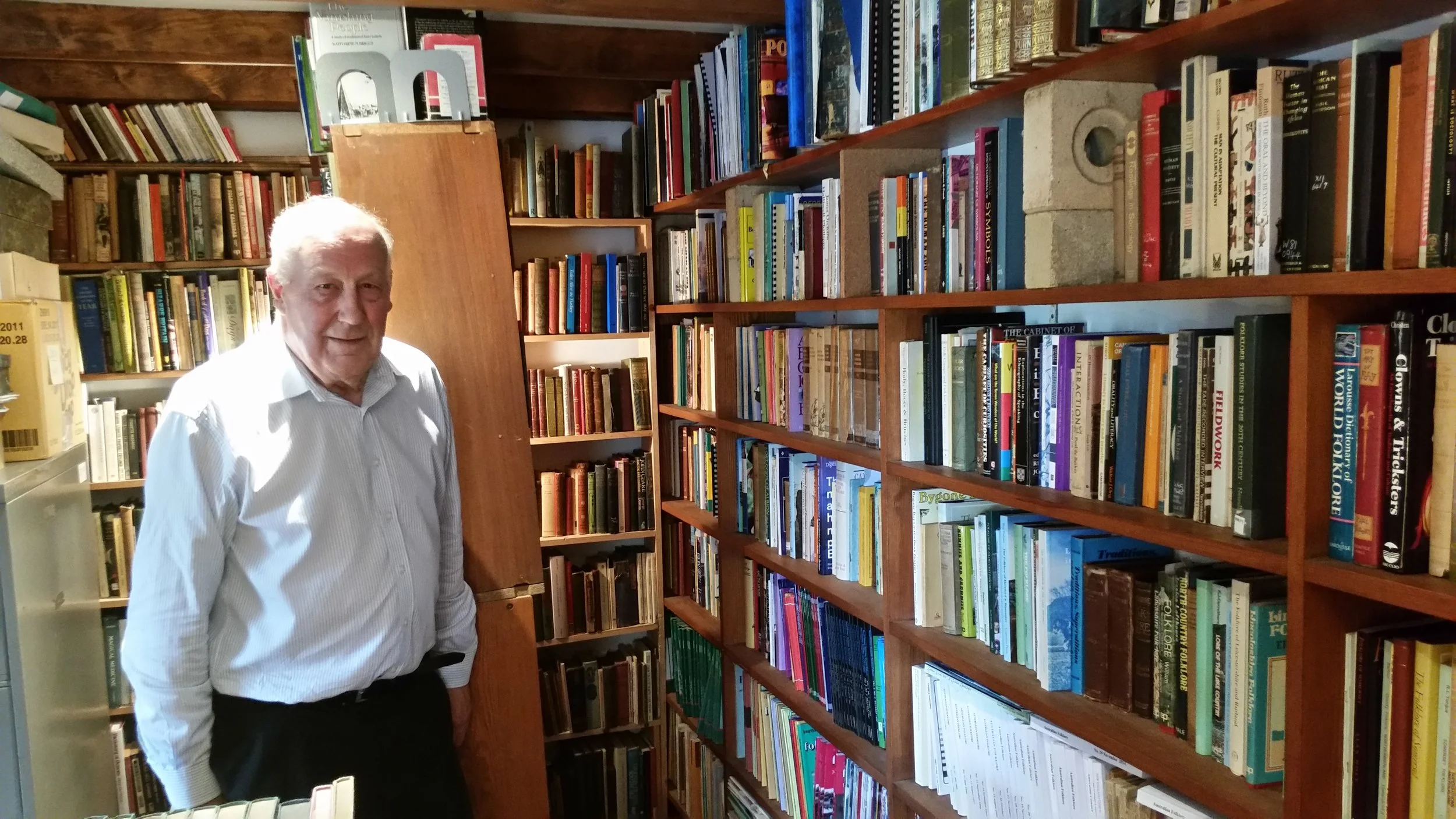
A good proportion of John’s collection of books and teaching materials is now housed in Sheffield Hallam University’s Special Collections.
“And it dawned on me then just how rich my own traditions were, both from my own family and friends and from my time in national service, because the forces are a great source of stories and sayings. I came back to him six weeks later with a pile of 600 completed cards. And he turned to me and said: ‘And you say you have no folklore!’”
The rest is history. Widdowson went on to complete his doctorate and returned to England determined to export Halpert’s New World method of collecting and teaching folklore back to the old country. His first opportunity came when he was appointed as the first lecturer in English Language and Linguistics at Sheffield University in 1964. The link between language and folklore was inevitable because speech is the way that tradition passes from generation to generation. The “Sheffield Survey of Language and Folklore” was launched the same year, but Sheffield was later dropped from the title when collecting spread nationwide.
“Traditional speech, jokes, proverbs and all kinds of uses of language was just one part of the categories of folklore that I learned from my mentor in Canada,” he explained. “Others included calendar customs and superstitions, folktales and legends, traditional arts and crafts, along with music, song and dance – such as the longsword dances that still flourish today at Grenoside and Handsworth.”
But even back in what he calls “the golden age” of the 60s the negative connotations of the word folklore – with its images of bearded folkies and dancing gnomes – led him to adopt an alternative phrase: “cultural tradition.” Despite initial scepticism the name stuck and was finally adopted in the title of the Sheffield University centre in 1976. Soon it incorporated a teaching centre, library, archives and the Traditional Heritage Museum on Ecclesall Road.
During this frenetic period of collecting and recording Widdowson’s team almost became part of folklore itself. “Back then we needed transport to reach the places we were giving lectures or attending events like the Haxey Hood game,” he recalled. “But all we had was one car, a clapped out old Mini, which was bought in Bradford for £199. It was distinguished by its red colour and by a small Perspex sign, handmade by Paul Smith, which had the words “Survey of English Language and Folklore” written on it. This was placed inside the rear window of the Mini wherever we went. Ironically, although this was the only car we had people used to stop us and say ‘we see your little cars everywhere.’”
“But from the very beginning we had difficulties with image,” he admits. “People automatically associate folklore with everything that is old, uneducated, rustic. Morris dancing in particular has become a butt for jokes whenever anyone in the media wants to vilify the idea of Englishness and what it means to be English.
“The English claim they are proud of their history and traditions but little is done to collect and preserve them. And whereas the Scots, Welsh and Irish seem proud to celebrate their unique customs and language, in these politically correct days the English seem oddly embarrassed by attempts to recognise their own distinct identity and traditions. But the embarrassment we feel is a legacy from the old colonial past and the notion of ‘us and them.’ Folklore was and is still seen by many as something that ‘other people have.’”
Sheffield University are acutely aware of the value of the collection they have inherited. The centre’s library alone contains over 40,000 books and theses, while the archives contain an equivalent number of recordings, slides, newspaper cuttings and collecting slips. In a statement the university have underlined their commitment to the future of both the collection and the teaching of folklore at the centre which has an academic staff of two, including the current Director, Dr Joan Beal.
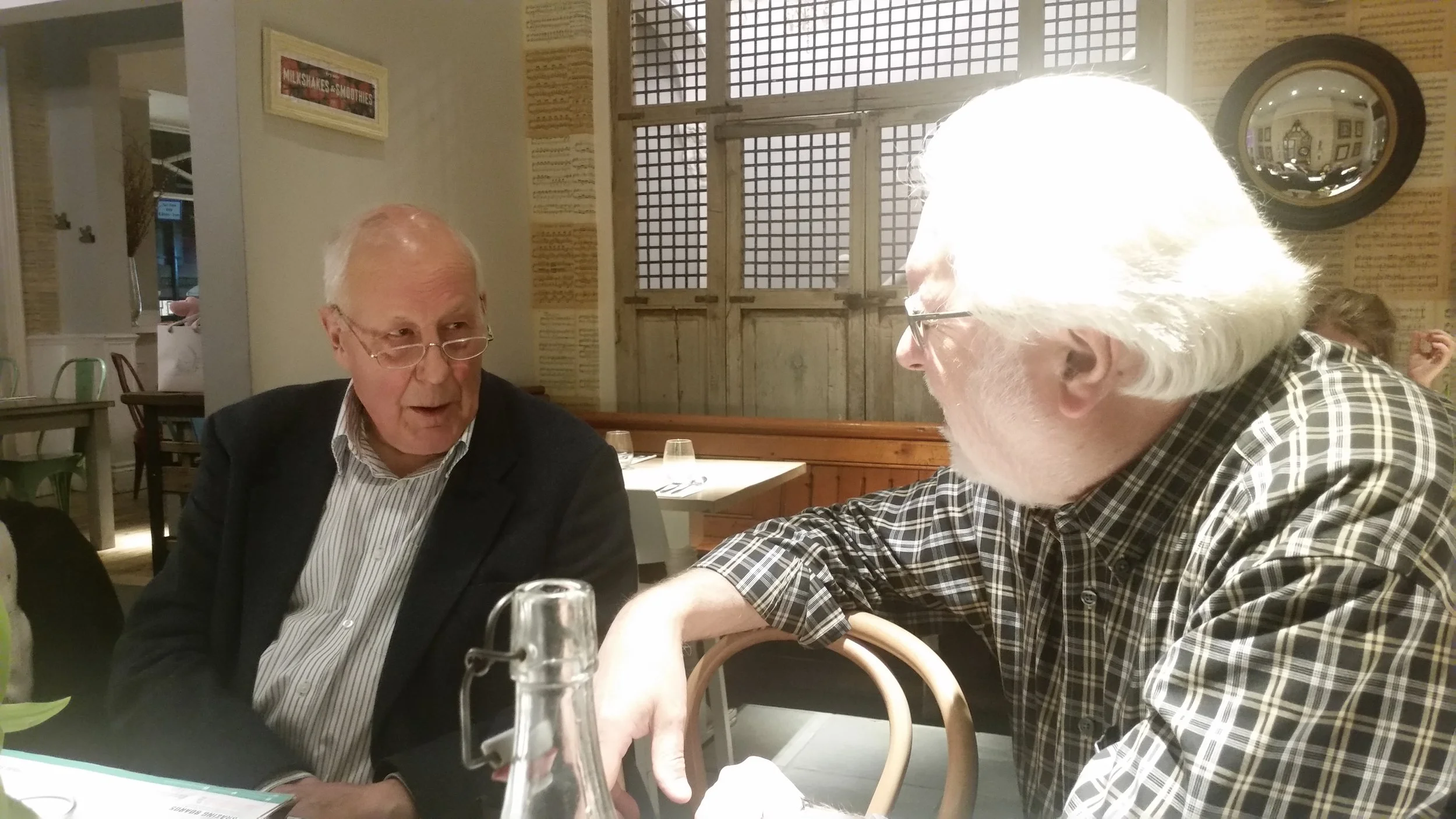
John with colleague and friend, Professor Paul Smith.
In retirement John Widdowson plans to return to what he does best – collecting folklore and helping to run the Traditional Heritage Museum. In response to the uncertainty he feels about the future, he has set up his own Survey of English Tradition from his home in the High Peak. “People are still sending me stuff and I have my own personal library piled up in my study, much to the concern of my wife,” he grins. “But I want to continue collecting and I hope eventually that people will recognise how important this subject really is.”